Why does medication and allergy information on a permission slip need careful handling by school staff?
The health section of a slip is where privacy, safety, and liability meet. Here is how to collect it, who should see it, and how it should travel on the trip.
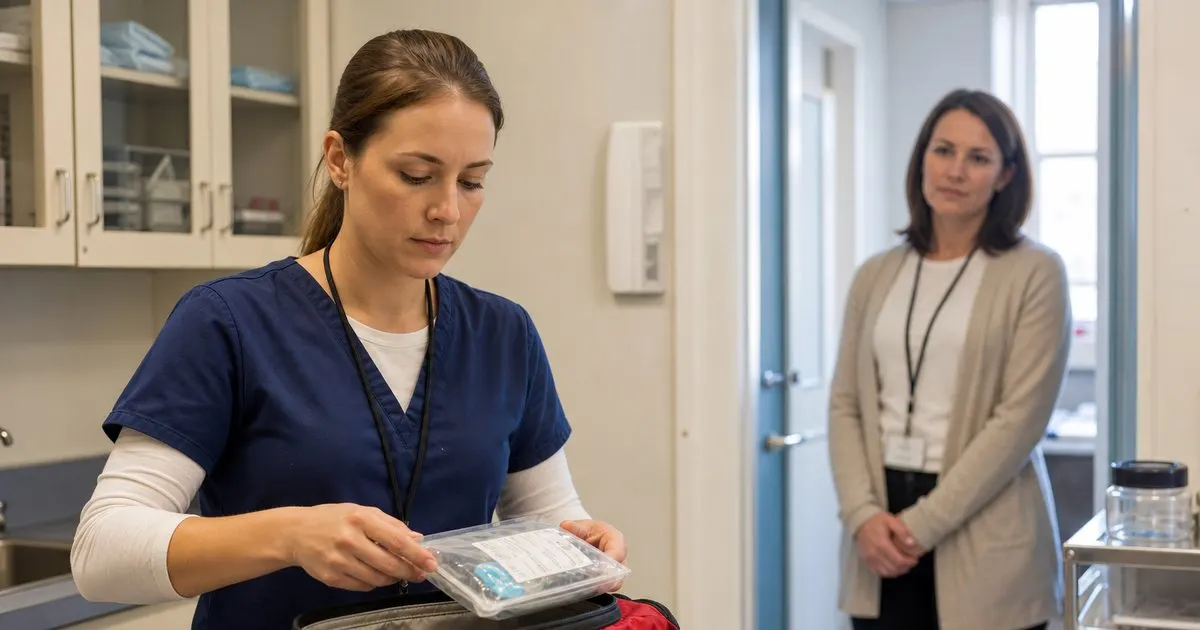
It is health information, and the school is responsible for it
Once a parent writes that a child has a peanut allergy and carries epinephrine, the school holds sensitive health information about a minor. Under the federal education privacy law that governs student records, that information is part of the student's education record and can be shared only with staff who have a legitimate need to know. A chaperone supervising that child on the trip has that need. The parent volunteer driving a different group probably does not, and neither does the whole class.
The practical consequence is that the health section should not be treated like the rest of the form. A stack of paper slips passed around a staff room, or a spreadsheet emailed to every chaperone with every child's allergies, is a common and avoidable mistake. Separate the medical information from the yes or no consent, store it where access is controlled, and share it deliberately with the specific adults who need it. Related: How can teachers collect field trip permission slips without chasing paper all week?
Keep reading: How can teachers collect field trip permission slips without chasing paper all week?, Are typed parent e-signatures valid enough for a school field trip permission form?, What is the fastest way to get every parent to return a permission slip on time?. See how SlipSignr helps you school permission slip signing and collection.
Ask for what you will actually act on
A field trip form should ask the questions that change what happens on the trip: life-threatening allergies, medications that must be taken during the trip window, conditions a supervising adult needs to recognize such as asthma, seizures, or diabetes, and anything that affects participation in the day's activities. It should not ask for a full medical history. The more you ask, the more you must protect, and the less likely a parent is to fill it in carefully. Related: Are typed parent e-signatures valid enough for a school field trip permission form?
Make the form work with the school nurse's existing records rather than replacing them. Many schools have the nurse review the trip roster against health plans before departure and flag students who need a medication bag, an action plan, or a trained adult in their group. The slip's job is to capture what has changed since the last record and to confirm the parent's instructions for this specific day. If a parent says the child needs a rescue inhaler at 1 p.m., that is a trip instruction, and it needs a named adult responsible for it. Related: What is the fastest way to get every parent to return a permission slip on time?
Who carries it, who sees it, and how it travels
On the trip, the lead teacher typically carries the full set of health information in a sealed folder or on a locked device, and each chaperone receives only the notes for the students in their group, ideally on a single card or list that can be collected and destroyed afterward. Medications travel in labeled containers with the trained adult assigned to that student, following the school's medication administration policy, not in a child's backpack unless a self-carry authorization is on file. Related: What information should a school permission slip collect beyond a simple yes or no?
Avoid the informal shortcuts. Photographing the medical page and texting it to chaperones puts the information on personal phones with no way to retrieve it later. Announcing allergies to the whole group at the bus is a privacy breach dressed up as safety. If your consent tool is digital, look for the ability to restrict who can view the health fields and to produce a per-group chaperone sheet, so you are not manually copying sensitive details into a message.
After the trip: retain, update, and clean up
When the trip ends, collect the chaperone cards and shred them, and make sure any medication returns to the nurse or the parent. The signed forms themselves are kept according to the district's records retention schedule, which for consent forms is typically at least a few years, and longer if there was an incident. Ask your office what the schedule says rather than guessing.
Finally, feed anything new back into the permanent record. If a parent disclosed a new allergy on a trip form, the nurse's file should be updated so the next form does not start from stale information. A trip slip is often the first place a school learns about a change in a child's health, precisely because it forces the question. Treating it as a one-off piece of paper wastes that.
- Medical details on a slip are protected student health information and should be shared only with adults who need them.
- Ask only for what changes the trip: life-threatening allergies, in-window medications, and conditions a supervisor must recognize.
- Give each chaperone only their group's notes, and never text photos of medical pages.
- After the trip, destroy chaperone copies, return medications, and update the nurse's permanent record.

Julien Jimenez
Julien Jimenez is an independent software builder based in Paris. He designs, ships, and operates focused SaaS products for small businesses and independent professionals. Read the full author page.
Signed slips, back in a day
School permission slip signing and collection. SlipSignr is built to help you put this into practice.
Start collecting slipsMore from the SlipSignr blog



Get the SlipSignr playbook
Practical guides on school operations, straight to your inbox as we publish them. No spam, unsubscribe any time.